
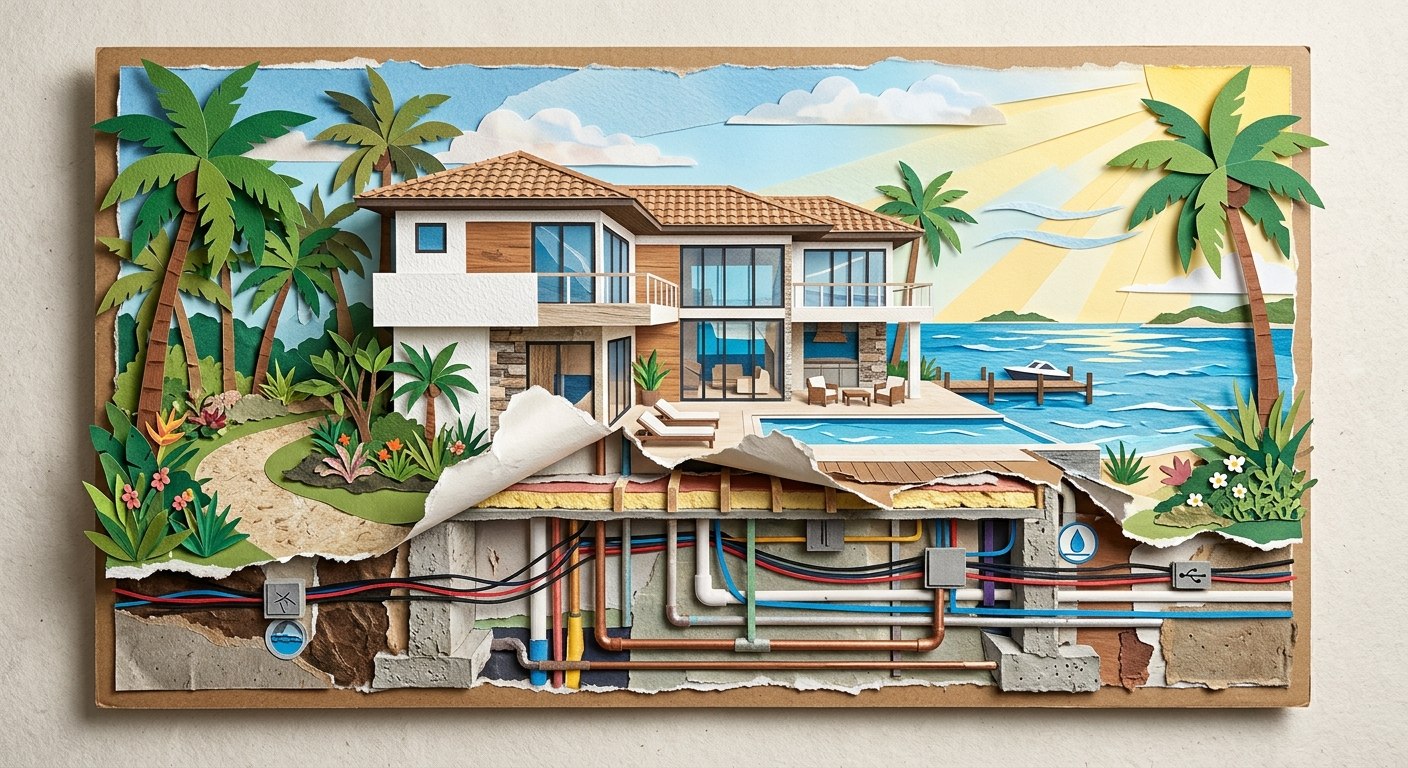
Home Inspection Details South Florida Buyers Cannot Afford to Miss
Most buyers walk into a South Florida home and look straight at the kitchen design, the pool layout, or the water view. They completely miss the hidden systems that determine whether that house will be safe, easy to insure, and worth its price tag five years from now.
This information gap is exactly where a home inspection matters most to protect your hard-earned money. It’s also where working with a real estate agent with a background in home building gives you a massive financial advantage.
South Florida homes carry hidden risks, including drainage problems, aging pipes, and roof age. These issues directly affect insurance coverage and long-term value. Buyers who miss these details before making an offer often pay for them after closing. Knowing what to look for before you fall in love with the finishes is the difference between a protected investment and an expensive surprise.
Drainage and Grading on the Property
The slope of the land is one of the most important details a South Florida buyer can look at. When a yard slopes toward the house rather than away from it, heavy rainwater pools right against the exterior walls.
Over time, this poor drainage causes moisture to soak into the walls, stresses the foundation, and rots the wood framing. This damage stays hidden behind the drywall until it becomes an expensive problem.
When Adam Levy walks into a home in Palmetto Bay or Pinecrest, his first checks have nothing to do with pretty colors or floor plans. He measures the exact slope of the ground from the street to the front door.
“If you are at the crown of the road and it goes down to the front door, don’t buy the house. That is one of the biggest problems.” – Adam Levy, Broker Associate, The Levy Group at Compass
In areas where tropical storms are common, a new, larger home built next door can push all its extra rainwater straight into your yard. Current Pinecrest building codes require new builders to retain and manage most of their rainwater on their own lots. These rules are in accordance with Miami-Dade County stormwater management regulations.
In older neighborhoods, city planners never required this type of engineering. The results show up years later as hidden leaks, cracked concrete, and wood rot behind walls that look perfectly fine on the outside.
Most agents start by checking finishes and the kitchen layout. My years of building experience taught me to check the grade.
Plumbing and Electrical Problems That Stop Home Sales
Two of the most expensive risks in South Florida homes are completely hidden: the plumbing and the wiring. Insurance companies check both of these systems closely, and problems here can instantly kill a home sale after the contract is signed.
Florida insurance companies require a special four-point inspection for any home over a certain age. This report measures the remaining life of the roof, electrical wires, plumbing lines, and air conditioning system. If any of these systems are outdated, the insurance company will deny coverage.
When a home cannot obtain insurance, banks will refuse to approve a home loan, causing the deal to fall apart.
“We’ve had deals where insurance will not cover the house, and because it’s a $50,000 roof, the deal crashes. Because PVC piping was not found, and it was the old galvanized, transactions have crashed. Houses that are not properly storm-protected with hurricane windows or storm panels are falling apart in transactions. We see it happening every day.” – Adam Levy, Broker Associate, The Levy Group at Compass
Old cast-iron sewer pipes rust and clog from the inside, while old galvanized water lines restrict water pressure over time. Likewise, outdated electrical wires or ungrounded breaker boxes create major safety hazards and insurance roadblocks for a new buyer.
Finding these problems early does not mean an older home is a bad investment. Many excellent sales in Palmetto Bay involve beautifully updated 1960s homes with brand-new plumbing and wiring. The key is finding out what is inside the walls before you fall in love with the flashy countertops.
Roof Age and Its Impact on Your Insurance Bill
The age of a roof is a strict rule for insurance companies in Florida, and it directly changes how much it costs to own a home every month. That is not a cosmetic detail or a small item to argue about later. It is a major expense that you must factor into your math before you write an offer.
Replacing a tile or metal roof in South Florida can easily cost $50,000 or more, depending on the house’s size. If you buy a home with a roof nearing the end of its life, your actual cost to own it is much higher than the sale price.
Most insurance companies will restrict or deny coverage for tile and shingle roofs over 15 years old. Modern metal roofs usually receive better treatment because they withstand heavy hurricane winds well.
The wind safety report and the basic four-point inspection are the two most important documents when buying a South Florida home. Insurance companies read both forms to set your annual premium.
If you want to know whether a roof’s age should lower your offer price, talk to The Levy Group before you submit your paperwork. Spotting these issues early ensures you keep the upper hand during negotiations.
5 Things to Check Before You Make an Offer
If you are looking at homes in Palmetto Bay, Pinecrest, Coral Gables, or any luxury neighborhood in Miami, verify these five items before you sign a contract.
- Drainage Grading: Confirm the terrain slopes consistently away from the foundation walls to prevent water damming underground.
- Plumbing Material Composition: Verify the presence of modern PVC systems rather than legacy cast iron lines, which degrade from the inside out.
- Roofing Age Certification: Audit the wind mitigation documentation to calculate the exact remaining lifespan of the current roof deck.
- HVAC Mechanical Efficiency: Evaluate the condition of the ductwork inside the attic spaces to prevent moisture collection, mold growth, and drywall degradation.
- Electrical Panel: Inspect the service panel brand and wiring configuration to ensure immediate insurability and prevent post-closing safety hazards.
None of these systems shows its true condition in a glossy online photo. However, the condition of each one will affect what it will actually cost to live in the home.
FAQs About South Florida Home Inspections
Why do South Florida home inspections turn up problems that weren’t in the listing?
Listing photos are designed to show off the prettiest parts of a house. A professional home inspection closely examines the roof and key systems you cannot see in marketing flyers. Problems like rusty pipes, old electrical boxes, or bad yard drainage do not show up in listing pictures. They only surface when an experienced agent or inspector looks past the cosmetics.
Can a buyer negotiate based on South Florida home inspection findings?
Yes. The inspection period is your best opportunity to renegotiate the terms of your deal. If the inspector finds an old roof, bad plumbing, or a broken AC unit, you can ask the seller for a price drop or a cash credit. Finding these issues before you make your initial offer is even better, because you can build the repair costs right into your starting price.
How does storm protection compliance affect insurance premiums in South Florida?
Homes without certified impact windows or verified storm panels face steep price penalties or outright rejection by insurance companies. In Florida’s tough insurance market, storm protection is a primary factor in your ongoing monthly housing costs. You should check for impact windows during your first walkthrough, not after you are already locked into a contract.
Is buying an older South Florida home a bad investment?
Not at all. Many of the best home sales in areas like Pinecrest and Palmetto Bay involve beautifully updated homes. What matters is knowing the age of the roof, pipes, and wires before you buy so that you can plan your budget.
What does a wind mitigation inspection measure?
This inspection measures how well a house withstands hurricane-force winds. The inspector checks the condition of the roof, the strength of the shingles or tiles, how the roof is nailed to the walls, and whether all doors and windows have storm protection. The report goes straight to your insurance company to earn you mandatory discounts on your bill. Homes with a sloped “hip” roof and full-impact windows see the biggest price drops.
How does a construction background affect what a buyer’s agent notices during a walkthrough?
An agent who has spent years managing real home-building projects understands framing, plumbing, and drainage in ways that standard sales courses cannot teach. This experience allows them to spot serious structural flaws that might look minor to an untrained eye. This builder’s knowledge changes your home tour from a simple walkthrough into a deeper analysis.
What is the difference between a four-point inspection and a general home inspection?
A full home inspection is a complete check that covers everything from kitchen appliances to garage doors. A four-point inspection is a shorter report made specifically for insurance companies. It focuses only on the roof, electrical system, heating/cooling, and plumbing lines. Insurers require the four-point form because these four systems are associated with the most expensive water and fire claims.
Know What You’re Buying Before You Write the Offer
A home’s true value depends on what you cannot see during a quick walkthrough. Drainage, roof age, plumbing materials, and electrical systems drive long-term costs and insurance outcomes. Buyers who understand these factors avoid expensive surprises after closing.
The Levy Group combines real estate expertise with hands-on construction experience. We help clients spot issues that change price and risk before inspections begin. Contact us before your next tour to ensure you have a team with the right knowledge on your side.
Adam Levy is a broker associate of The Levy Group at Compass. Licensed since 1997, he is a member of the Master Brokers Forum, representing the top 1% of 46,000+ licensed agents in the Miami Board of REALTORS®, and holds a State of Florida Certified Residential Contractor designation that directly informs how he evaluates every property he represents.
ABOUT THE EXPERT
Adam is a Broker Associate and co-founder of The Levy Group, specializing in luxury residential real estate across Palmetto Bay, Pinecrest, Coral Gables, Coconut Grove, and South Miami. Licensed since 1997, Adam has closed over 1,000 transactions at a seven-figure average sale price. He is a member of the Master Brokers Forum (MBF), representing the top 1% of 46,000+ licensed agents in the Miami Board of REALTORS®. A University of Florida graduate with a background in residential construction, Adam ranked #1 in his office at both Coldwell Banker and Berkshire Hathaway for 20+ consecutive years.

Comments are closed.