
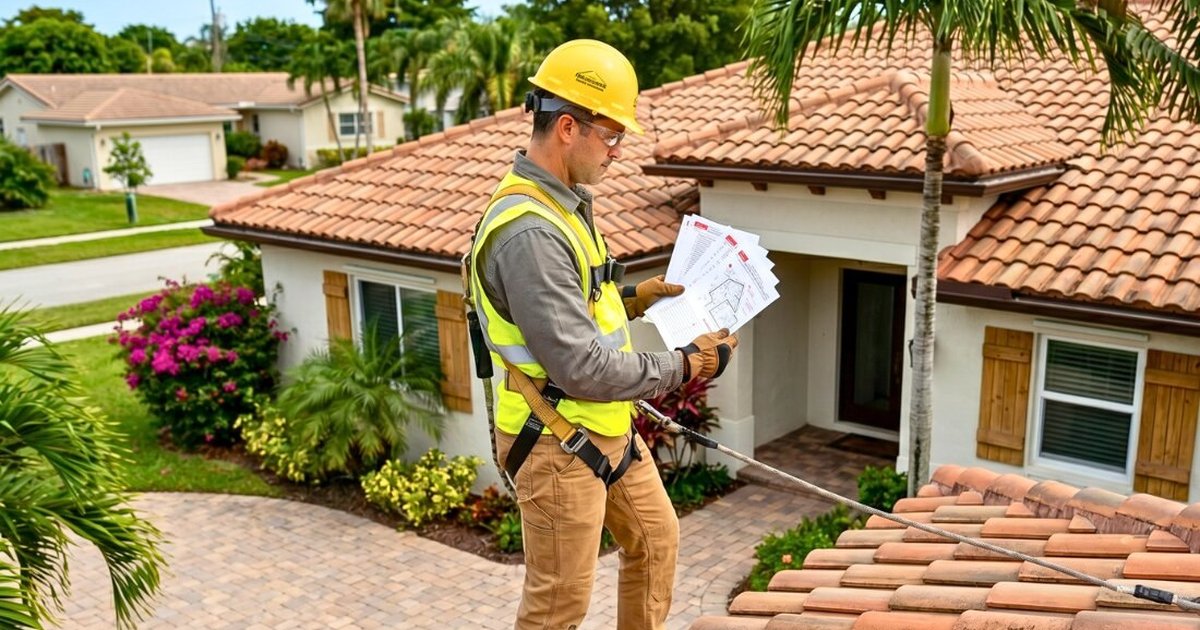
Roof Age Is the Biggest Deal Breaker in Miami-Dade Home Sales
Roof age is the single most common reason Miami-Dade luxury transactions fall apart before reaching the closing table. It is not the sales price or the general inspection that stops the sale. The main obstacle is the roof.
Insurance companies in Florida now treat roof age as a strict requirement for coverage. When a company refuses to write a home policy, a buyer with a mortgage cannot close on the loan.
This issue affects buyers and sellers across Palmetto Bay, Pinecrest, and Coral Gables. The roof conversation belongs at the start of your home search, long before the inspection report arrives.
Insurance carriers in Florida treat roof age as a coverage qualification, not just a pricing factor. A tile or metal roof replacement in Miami-Dade runs around $50,000. Buyers who miss this detail face either uninsurable properties or major costs before they ever move in. Sellers with updated roofs close faster and with fewer conditions than any other single variable.
The Basics of a Four-Point Inspection
Most buyers do not discover the rules of a four-point inspection until they are already locked into a contract. This report evaluates four core systems: the roof, electrical, plumbing, and HVAC. The report goes directly to the insurance company for review.
A separate wind safety report follows rules from the Florida Office of Insurance Regulation. This document covers how securely the roof attaches to the house framing and checks what type of storm windows or shutters protect the openings.
When the age of a roof is questionable, buyers face a double problem. They might not get insurance approval, and the massive replacement cost lands on them before they even unpack.
Insurance Guidelines Influence Sale Terms in Many Transactions
The insurer’s check of a roof’s remaining life carries far more weight than a buyer’s offer price. That gap between a home inspector’s opinion and insurance company rules is where deals often end. A seller can price a house perfectly relative to comparable sales and still watch the deal fall apart because no insurer will cover the roof.
“If an insurance company says a tile roof has 20 years of life, but the inspector says it has five years of life, you have a discrepancy. What’s going to win ultimately? The insurance company. The age of the roof is a big deal because your average tile roof in our area is 50 grand. Metal, same basic price.” – Adam Levy, Broker Associate, The Levy Group at Compass
A home with a newer roof removes one of the most common friction points in a Miami-Dade transaction. That positions the property for a cleaner, faster close.
Advantages of Partnering with a Sales Agent With Construction Experience
The difference between an agent who understands home building and one who does not is most obvious during your initial property walkthroughs. When a buyer tours with an agent who has construction expertise, the evaluation is completely different.
The insurance risk calculation happens automatically alongside the home tour. An expert agent spots which pipes cause problems and knows what an old electrical box means to an insurance company. They can read the yard drainage and estimate the cost to fix the ground slope.
“We’ve had deals where the insurance will not cover the house, and because it’s a $50,000 roof, the deal crashes. PVC piping not found, old galvanized in its place; transactions have crashed over that, too. Houses without proper storm protection, hurricane windows, or storm panels are falling apart. My construction background keeps me in check. I can spot deficiencies. I can put buyers and sellers in touch with reputable contractors. It gives them the peace of mind that I can explain a house much more thoroughly than most.” – Adam Levy, Broker Associate, The Levy Group at Compass
For buyers checking out local neighborhoods, looking past the cosmetic finishes is the only way to avoid a very expensive mistake. I covered this in a recent post about the inspection details buyers can’t afford to miss.
If you want to check a property’s insurance risk before making an offer, start a conversation with my team from The Levy Group today.
Setting an Accurate Listing Price
These insurance rules not only affect buyers. Sellers who label their home as completely remodeled when the roof is old are pricing against the insurance market instead of actual sales.
Smart buyers run numbers on repairs before they write an offer. They know what a new roof and a new electrical panel cost. They either subtract those costs from your asking price or walk away to look at another house. An agent with building knowledge can tell a seller exactly what will show up on the insurance paperwork.
Sellers who get their homes sold quickly in this market usually share the same profile. They offer a new roof, updated electrical, impact windows, and a home that passes inspection without any conditions. These homeowners secure full-price offers and sell their houses much faster than their neighbors. Sellers who ignore this reality watch their listings sit unsold.
The Florida Building Code sets baseline rules for roofing, but insurance companies apply much stricter guidelines regarding the roof’s remaining life. Knowing the difference between passing city codes and satisfying an insurance company is something most sales agents cannot explain.
The roof is always your starting point. Get it right, and the rest of the sale becomes much easier.
FAQs About Roofs, Insurance, and Home Sales
At what age do roofs start causing insurance problems in Florida?
Most Florida insurance companies look closely at tile and shingle roofs that are over 15 years old. A roof an inspector labels with only 5 years of life will cause immediate coverage issues, regardless of calendar age. The insurance company’s math on remaining life matters far more than the permit date.
Can a deal fall apart because of roof age alone?
Yes, this happens frequently. When an insurance company refuses to cover a house, a buyer using a standard home loan cannot close the sale. Banks require proof of insurance before they will fund your mortgage. If no insurer will write a policy at a fair price, the deal collapses. Cash buyers face a different choice, but most luxury buyers still want insurance to protect their million-dollar assets.
What does a wind mitigation report measure, and how does it affect premiums?
A wind safety report documents how securely the roof deck is connected to the house framing and assesses your opening protection. It includes looking for impact doors, hurricane windows, or approved storm panels. Insurance companies use this report to calculate discounts on your monthly bill. Homes with top safety scores see insurance savings of 20 to 30 percent compared to unprotected houses.
Should sellers replace the roof before listing, or offer a credit instead?
Replacing the roof before selling removes the biggest argument from your real estate transaction. Offering a closing credit keeps the issue alive through stressful negotiations and underwriting checks. Buyers usually price the hassle of fixing a roof much higher than the actual cost of the work. Sellers who complete the project first generally keep more money and close faster.
What other systems commonly fail the four-point inspection in Miami-Dade?
Old galvanized pipes rust over time, often leading to insurance rejections. Older electrical panels cause identical issues due to known fire hazards. Houses without hurricane windows or storm panels face massive price increases. Each of these serious issues appears clearly in the four-point report alongside the roof age.
How do I find out if a home has had unpermitted roof work?
You should check the complete history on Miami-Dade County’s online building permit portal before making an offer. Unpermitted roof work is a massive warning sign because it was never checked for basic code compliance. Many insurance companies will deny coverage for a roof without an official permit trail. Your real estate agent can help you search the county files.
What is the difference between a four-point inspection and a full home inspection?
A full home inspection covers everything from kitchen appliances to garage doors. A four-point inspection is a shorter report focused only on the roof, electrical, plumbing, and HVAC. Insurance companies want the four-point report because those systems are responsible for the most expensive fire and water claims. Buyers usually order both reports at the same time to avoid surprises.
The Roof Question Belongs Before the Offer
Roof age in Miami-Dade County should never be a surprise after your home inspection. It is a necessary calculation that decides whether a real estate deal is even possible.
I know exactly what the four-point inspection covers and have the construction background to evaluate those factors. Contact The Levy Group to work with a team that can help you get ahead of insurance issues when buying or selling a home.
Adam Levy is the broker associate of The Levy Group at Compass. Licensed since 1997 and a graduate of the University of Florida School of Building Construction, he spent five years in construction management before entering real estate. He is a State of Florida Certified Residential Contractor and a member of the Master Brokers Forum, representing the top 1% of licensed agents in the Miami Board of Realtors®.
ABOUT THE EXPERT
Adam Levy is a Broker Associate and co-founder of The Levy Group, specializing in luxury residential real estate across Palmetto Bay, Pinecrest, Coral Gables, Coconut Grove, and South Miami. Licensed since 1997, Adam has closed over 1,000 transactions at a seven-figure average sale price. He is a member of the Master Brokers Forum (MBF), representing the top 1% of 46,000+ licensed agents in the Miami Board of Realtors®. A University of Florida graduate with a background in residential construction, Adam ranked #1 in his office at both Coldwell Banker and Berkshire Hathaway for 20+ consecutive years.

Comments are closed.